WHAT IS COPY TRADING? A Guide to Copying Expert Traders
If you've spent any time researching ways to get into the markets without becoming a full-time chart-watcher, you've probably run into the term "copy trading." It shows up in broker ads, YouTube finance channels, and trading forums alike, usually with some version of the pitch: pick a trader who knows what they're doing, copy their trades automatically, and let their skill work for you.
That pitch is true, as far as it goes. But "as far as it goes" matters a lot here, because copy trading sits in an odd spot between investing and gambling, between passive and active, and between a genuinely useful tool and a marketing buzzword. This complete guide to copy trading walks through what copy trading is, how copy trading works, whether copy trading is profitable, whether copy trading is safe, the best copy trading platforms and copy trading apps available, and how to choose the best copy traders to follow — without the hype.
A quick note before we start: this article is educational, not financial advice. Copy trading involves real risk to real money, and nothing here should be read as a recommendation to use any specific copy trading platform or follow any specific copy trading strategy.
So What Is Copy Trading?
Copy trading is a feature, usually built into a brokerage or trading platform, that automatically replicates the trades of another trader in your own account. So what is copy trading in practice? You pick a trader (sometimes called a "signal provider," "strategy provider," or "master trader"), allocate some amount of money to follow them, and from that point on, when they open or close a position, your account does the same thing — automatically, without you clicking anything.
That's the simple copy trading explained version. To actually understand how copy trading works, it helps to break it into its moving parts.
The Basic Mechanics of How Copy Trading Works
When you copy a trader, you're not literally trading alongside them in the same account. Instead, the platform sets up a parallel relationship between your account and theirs. This is the core of how copy trading works on most copy trading apps and copy trading platforms:
- You choose a trader from a list or marketplace, usually with visible stats like past returns, risk level, number of followers, and trade history.
- You decide how much capital to allocate to copying them. This might be your entire account or just a portion of it.
- The platform scales their trades to your allocation. If the trader you're copying puts 5% of their account into a particular position, the platform typically opens a position worth roughly 5% of your allocated capital in the same instrument, direction, and (often) with similar risk parameters like stop-loss levels.
- Trades execute automatically. When the trader opens a position, yours opens within moments. When they close it, adjust it, or set a stop-loss, your position mirrors that action.
- You can usually intervene. Most copy trading platforms let you set your own stop-loss for the overall copy relationship, manually close a specific copied trade, or stop copying the trader entirely at any time.
The key idea behind how copy trading works is proportional replication. You're not sending the trader your money to manage directly (that would be closer to a managed account or a fund), and they typically have no visibility into who's copying them or how much. Your capital stays in your own account the whole time; the copy trading platform's software is just mirroring their actions into your positions.
Copy Trading Explained: How Is This Different From Similar-Sounding Things?
Copy trading gets lumped together with a few related concepts, and it's worth knowing the differences before we go further into copy trading explained territory:
- Social trading is the broader category — platforms where traders share ideas, performance stats, and commentary, and other users can choose to follow or interact with them. Copy trading is one feature within a social trading platform; you can have social trading (following, commenting, watching) without ever auto-copying anyone's trades.
- Mirror trading is a closely related but slightly more rigid version, historically used with predefined, often algorithmic strategies rather than a named individual trader. The line between mirror trading and copy trading has blurred over time, and many platforms use the terms loosely.
- PAMM/MAM accounts (Percentage Allocation Management Module / Multi-Account Manager) are a more formal, often more regulated structure where a professional manager actually trades pooled client funds directly, rather than your account independently replicating their trades. This is closer to handing someone discretionary control of your money, which carries different legal and regulatory implications than copy trading.
- Robo-advisors use algorithms to manage a portfolio based on your goals and risk tolerance, but they're not replicating another individual's live trades — they're following a model.
Copy trading's particular appeal is that it tries to combine the best parts of these: you get to see a real human (or sometimes an algorithm) with a public track record, you keep your money in your own account, and the execution is automated rather than requiring you to manually place every trade.
Where Did Copy Trading Come From?
Copy trading as a mainstream retail feature really took off in the early-to-mid 2010s, as forex and CFD brokers began building social and copy trading features directly into their platforms to compete for retail traders, particularly drawn in by mobile apps and gamified interfaces. It later expanded heavily into crypto exchanges, where copy trading became a popular way for less experienced users to participate in fast-moving, 24/7 markets without learning technical analysis from scratch. By 2026, copy trading exists across forex, CFDs, stocks, and crypto, with dozens of copy trading platforms and copy trading apps offering some version of it.
What Markets Can You Copy Trade?
Copy trading isn't limited to one asset class. Depending on the copy trading platform, you can typically copy traders across:
- Forex (currency pairs) — historically the most common copy trading market, especially via MetaTrader-based platforms
- CFDs (Contracts for Difference) on indices, commodities, and shares
- Stocks on platforms that support copying equity-focused traders
- Cryptocurrency — copying spot or derivatives traders on crypto exchanges, often with leverage involved
Each of these markets has very different risk profiles, liquidity characteristics, and regulatory treatment, which matters a lot once you get to choosing a copy trading platform and a trader, both of which we'll cover later.
See our complete guides on futures copy trading, forex copy trading, and crypto copy trading.
Is Copy Trading Profitable?
This is the question everyone actually wants answered: is copy trading profitable, and can you make money copy trading? The honest response is: it depends heavily on who you copy, what fees you pay, and how disciplined you are about managing the relationship — and on average, a meaningful share of copiers underperform or lose money, the same way a meaningful share of independent retail traders do.
Let's unpack that instead of leaving it at a shrug.
Can You Actually Make Money Copy Trading?
Yes, people do make money copy trading. If you copy a trader who performs well over the period you're following them, your account will generally reflect a proportional version of those gains, minus fees. There are traders on major copy trading platforms with multi-year track records of consistent, positive copy trading returns, and followers of those traders have profited.
But "yes, you can make money copy trading" is a very different statement from "it's likely" or "it's reliable," and a few structural realities pull the odds away from the optimistic pitch:
- Past performance is not a guarantee. The trader you're copying built their track record under specific market conditions. A strategy that worked well in a trending market may perform poorly in a choppy or reversing one. The number you see on a leaderboard reflects what already happened, not what will happen next.
- Survivorship bias skews the leaderboards. Platforms showcase their top performers prominently, because that's what attracts new copiers. The traders who blew up their accounts or quietly stopped trading aren't featured. This means the visible track records you're browsing are, by definition, a curated, above-average slice of all the traders who've ever used the platform — not a representative sample.
- Slippage and timing lag eat into copy trading returns. Even with automated copying, there's a small delay between when the lead trader executes a trade and when your account replicates it. In fast-moving markets, that lag can mean you get a worse entry or exit price than the person you're copying, which compounds over many trades.
- Fees reduce your net copy trading returns. Copy trading isn't free. Depending on the platform, you might pay a flat subscription fee, a performance fee (a cut of your profits, often 10-30%), wider spreads on copied trades, or some combination. A trader showing a 20% gross return might leave you with significantly less after fees — and if the trader has a losing period, you still typically pay any flat or subscription-style fees regardless of outcome.
- A leader's drawdown often hits followers harder. Several industry analyses have noted that when a top-performing trader has a losing streak, the loss experienced by their copiers can end up larger than the leader's own drawdown, once execution differences, position scaling, and timing are factored in. A trader's 10% drawdown might translate into a noticeably larger hit for some followers.
Is Copy Trading Worth It?
Whether copy trading is worth it depends on what you're comparing it to and what you're trying to get out of it.
Compared to actively trading yourself with no experience, copy trading can be a reasonable way to get market exposure while you learn, since you benefit from someone else's process rather than guessing blind. Compared to low-cost diversified investing (index funds, for example), copy trading is generally higher risk, higher fee, and higher effort, with no strong evidence that it outperforms on a risk-adjusted basis over the long run. Compared to fully manual discretionary trading, copy trading can save time and reduce some emotional decision-making errors, since you're not making the buy/sell call in real time yourself.
Some industry estimates suggest copy trading can meaningfully reduce the time investors spend on day-to-day market analysis, since the lead trader is doing the research and timing. That's a genuine convenience benefit that factors into whether copy trading is worth it for you. But time saved isn't the same as money made, and it doesn't offset the structural risks above.
What Kind of Copy Trading Returns Should You Expect?
There's no reliable, universal average copy trading return, because it depends entirely on which trader (or traders) you follow, what asset class they trade, what leverage they use, and the market conditions during your specific copying period. Be skeptical of any platform or advertisement that cites a single average return figure for "copy trading" as a category — that number is almost always cherry-picked or unrepresentative.
A more useful way to think about expected copy trading returns is in terms of risk-adjusted realism:
- Higher advertised returns on a trader's profile usually come with higher volatility and larger potential drawdowns, not a free lunch.
- A trader with modest, consistent returns and small drawdowns is statistically more likely to be running a sustainable approach than one with explosive short-term gains, though neither is guaranteed to continue.
- Returns you see during a strong bull market (especially common in crypto and certain stock periods) often don't persist once conditions shift, so a six-month track record during a rally tells you less than it appears to.
The takeaway: copy trading profitability is real but highly variable, fee-sensitive, and dependent on factors you don't fully control. Anyone treating copy trading returns as a passive, guaranteed income stream is working from a marketing narrative rather than the reality of how these platforms perform across their full user base.
Is Copy Trading Safe?
"Safe" is doing a lot of work in this question, so it's worth splitting is copy trading safe into two separate things: is your money safe from being stolen or mismanaged, and is the strategy itself safe from losing value. Both matter, and they're addressed differently when weighing copy trading risks.
Custody and Platform-Level Safety
One of copy trading's genuine structural advantages over some other "let someone else trade for you" arrangements is that, on most reputable platforms, your funds stay in your own account the entire time. You're not wiring money to the trader you're copying, and they typically can't withdraw or directly access your capital. The platform's software handles the replication; the trader you copy usually doesn't even know who's following them.
That said, "your funds stay in your account" only protects you if the platform itself is legitimate, solvent, and properly regulated. The platform-level copy trading risks to watch for include:
- Regulatory status. Is the broker or exchange licensed by a recognized financial regulator in your jurisdiction (for example, the FCA in the UK, ASIC in Australia, CySEC in Cyprus, or equivalent bodies elsewhere)? Regulation doesn't eliminate risk, but it adds oversight, dispute resolution mechanisms, and in some cases compensation schemes if the broker fails.
- Segregation of client funds. Reputable, regulated brokers are typically required to keep client money separate from company operating funds, which matters if the company runs into financial trouble.
- Withdrawal reliability. Read recent user reviews specifically about withdrawal experiences — slow or blocked withdrawals are one of the most common red flags reported about lower-quality platforms.
- Platform longevity and reputation. A platform that's operated for years with a visible regulatory history is generally a safer bet than a brand-new app with aggressive marketing and no clear licensing information.
Strategy-Level Copy Trading Risks
Even on a perfectly legitimate, well-regulated platform, the trading itself can still lose you money — and this is the risk most beginners underestimate, because the automation and social-proof elements (leaderboards, follower counts, public profiles) can create a false sense of safety. These are the core copy trading risks worth knowing:
- Leverage Risk — Many forex, CFD, and some crypto traders use leverage, meaning losses (and gains) are magnified relative to the capital at risk. A trader who looks impressively profitable may be taking on leverage-driven risk that can produce sharp losses just as fast.
- Concentration Risk — If a trader you copy puts a large share of their capital into one position or one type of trade, a single bad call can disproportionately affect your copied account.
- Correlation Risk — If you copy multiple traders and spread your capital across several traders who all happen to be making similar bets (long the same asset, exposed to the same market conditions), you don't get as much diversification as you might assume.
- Latency Risk — As mentioned earlier, mean your results won't be identical to the lead trader's, even when everything is working as intended.
- Stop-Loss Risk — In fast-moving or illiquid markets, a stop-loss order (yours or the lead trader's) may execute at a worse price than expected, a phenomenon called trade slippage.
Copy Trading Scams
Beyond the legitimate copy trading risks built into the mechanics, copy trading has also become a magnet for outright copy trading scams, particularly in crypto and unregulated forex spaces. Common copy trading scam patterns to watch for:
- Fake or fabricated performance histories. Some bad actors fabricate trading statistics or selectively show only winning periods, especially on platforms with weak verification of trader track records.
- "Guaranteed returns" language. Legitimate copy trading carries real risk of loss; any promotion that promises fixed or guaranteed returns is a strong copy trading scam indicator, not a feature.
- Unregulated platforms requiring direct deposits to a "manager." If a "copy trading" opportunity actually requires you to send funds to someone else's wallet or account rather than keeping your capital in your own account on a regulated platform, that's no longer copy trading in the sense described in this guide — it's a much higher-risk arrangement that resembles classic investment fraud structures.
- Pressure and urgency tactics. Time-limited "spots" to copy a supposedly elite trader, pushed through social media DMs or unsolicited messages, are a recurring copy trading scam pattern.
- Affiliate-driven hype with no substance. Because copy trading platforms often pay referral commissions, a lot of online "reviews" and "best trader" content is financially incentivized to oversell specific platforms or traders rather than give a balanced picture.
The practical answer to "is copy trading safe" boils down to a checklist: use a copy trading platform regulated in a jurisdiction you trust, keep your funds in your own account rather than sending them to an individual, verify trader statistics are platform-tracked rather than self-reported, and treat any guaranteed-return promise as an immediate copy trading scam red flag.
Before allocating capital to any trader, it is worth understanding both copy trading risk management and broader risk management strategies. While copy trading can simplify market participation, it does not eliminate the risks associated with trading leveraged financial products.
Benefits of Copy Trading
Copy trading has become increasingly popular among both new and experienced traders because it offers a practical way to participate in financial markets without having to make every trading decision yourself. While it does not eliminate risk, copy trading can provide several advantages when used responsibly.
Access Experienced Traders
One of the biggest benefits of copy trading is the ability to follow traders who have already developed strategies, market knowledge, and trading experience. Instead of learning everything through trial and error, beginners can observe how experienced traders approach risk management, position sizing, and market opportunities.
Save Time on Market Analysis
Successful trading often requires hours of research, chart analysis, and market monitoring. Copy trading can significantly reduce the time commitment required because the signal provider performs much of the research and decision-making. This makes copy trading appealing to busy professionals and investors who want market exposure without constantly watching charts.
Diversify Across Markets and Strategies
Copy trading allows investors to spread capital across multiple traders who may specialize in different markets and trading styles. For example, one trader may focus on forex, another on stock indices, and another on cryptocurrencies. This diversification can help reduce reliance on a single strategy or market sector.
Learn While You Invest
Unlike traditional investment products where decisions are made behind the scenes, copy trading often allows followers to see trades being opened, modified, and closed in real time. This transparency creates a valuable educational opportunity, helping traders understand market behavior and develop their own skills over time.
Many traders use copy trading as a stepping stone toward learning technical analysis, improving their understanding of trading psychology, and eventually creating their own trading plan.
Reduce Emotional Decision-Making
Emotions such as fear, greed, and impatience are common reasons traders lose money. Because copy trading automates trade execution, followers can avoid many of the impulsive decisions that often harm trading performance. By relying on a predefined strategy and signal provider, traders may find it easier to maintain discipline.
Maintain Full Control of Your Funds
In most copy trading arrangements, the signal provider never has direct access to your trading account or capital. Your funds remain in your own brokerage account, and you can stop copying, adjust allocations, or close positions whenever you choose. This provides a greater level of control than many traditional managed investment arrangements.
Scalable for Different Account Sizes
Copy trading platforms typically scale positions automatically based on the amount of capital allocated to a trader. Whether you are starting with a small account or managing a larger portfolio, the same strategy can often be replicated proportionally without manual calculations or trade management.
Access Markets You May Not Fully Understand
Many investors are interested in markets such as forex, futures, cryptocurrencies, or commodities but may not have the expertise required to trade them confidently. Copy trading can provide exposure to these markets by leveraging the experience of traders who specialize in those asset classes.
While these benefits make copy trading an attractive option for many investors, it is important to remember that profits are never guaranteed. Even highly experienced traders experience losing periods, which is why proper diversification, risk management, and due diligence remain essential when selecting traders to follow.
Best Copy Trading Platforms
Rather than crowning a single "best" platform — which tends to be a moving target driven by region, asset class, and regulatory availability, and is exactly the kind of claim that's easy to get stale or biased — it's more useful to understand the categories of copy trading platforms available, and the criteria that actually separate the top copy trading brokers from weak ones.
Categories of Copy Trading Apps and Platforms
Native social trading brokers. These are among the best copy trading platforms for beginners because they built copy trading directly into their own platform and user interface, often with public trader leaderboards, performance dashboards, and risk scores. eToro is probably the best-known example in this category, particularly popular with beginners due to its straightforward interface and multi-asset coverage (stocks, crypto, forex, commodities). Other copy trading apps, such as AvaTrade and Exness, have also built or integrated native copy trading features.
Forex/CFD brokers with third-party copy integration. Some well-established top copy trading brokers, particularly those focused on forex and CFDs, don't run their own social trading network but instead integrate with established third-party copy trading platforms (historically platforms like ZuluTrade or Myfxbook AutoTrade) via the MetaTrader (MT4/MT5) ecosystem. Pepperstone is a commonly cited example of a broker taking this approach. This route can appeal to more experienced traders who want broker flexibility plus copy trading functionality, though the copy experience is generally less polished than a native interface.
Crypto exchange copy trading apps. Several major crypto exchanges have added copy trading features that let users follow spot or derivatives traders directly within the exchange, with trades scaled to the follower's allocated balance. This category of copy trading apps has grown quickly given crypto's 24/7 trading environment and high retail interest in shorter-term trading strategies, though it also tends to carry higher volatility and leverage risk than traditional forex or stock copy trading.
Specialized or institutional-leaning copy trading brokers. Larger brokers offer ways to replicate professional strategies with more institutional-style reporting and risk controls, generally aimed at more experienced or higher-asset investors rather than total beginners.
What Actually Separates the Best Copy Trading Platforms From Weak Ones
Whatever category of copy trading apps you're considering, the criteria below matter more than marketing claims or "best of" rankings:
- Regulatory status in your country. This is the single highest-leverage check. A copy trading platform regulated by a recognized authority in your jurisdiction gives you legal recourse and oversight that an unregulated offshore platform does not.
- Transparency of trader statistics. Look for copy trading platforms that track and verify trader performance themselves (rather than allowing self-reported numbers), and that show meaningful risk metrics — not just headline returns, but maximum drawdown, win rate, average trade duration, and risk score.
- Fee structure clarity. Understand exactly what you'll pay: spreads, commissions, subscription fees, and performance fees, and how they interact. A platform that makes this hard to find is a yellow flag.
- Asset class fit. A platform excellent for forex copy trading may be mediocre for crypto or stocks. Match the copy trading platform to the market you actually want exposure to.
- Withdrawal track record. Check recent, dated user feedback specifically about how smoothly withdrawals are processed — this is one of the most telling practical signals of platform reliability.
- Risk controls available to you. The best copy trading platforms let you set your own stop-loss on a copy relationship, cap your maximum allocation to any one trader, and exit a copy relationship instantly without penalty.
- Minimum deposit and accessibility. Especially relevant for beginners — some copy trading apps have low minimums suited to testing the waters, while others are built for larger account sizes.
Given how often fees, regulatory availability, and even trader rosters change, and how much "best copy trading platforms" content online is shaped by affiliate incentives, it's worth doing your own current research directly on a platform's official site and your local regulator's register before committing funds, rather than relying solely on any single ranking of top copy trading brokers — including this one.
If you're comparing copy trading platforms, you may find our review of TopTrades vs eToro vs ZuluTrade helpful when evaluating different copy trading providers.
How to Choose Traders to Copy
This is arguably the most important section, because the copy trading platform you pick matters less than the decisions you make once you're on it. Two people using the exact same platform can have wildly different outcomes based purely on how to choose traders to copy and how they manage that relationship.
Look Past the Headline Return Number
The return percentage at the top of a trader's profile is the least informative number on the page, precisely because it's the number most likely to be cherry-picked, short-term, or about to mean-revert. Before copying anyone, dig into these factors for finding the best copy traders:
- Track record length. A trader with three-plus years of history through different market conditions (rallies, crashes, sideways grinds) has shown more than someone with a flashy six-month run during a single bull phase.
- Maximum drawdown. This tells you the worst peak-to-trough loss the trader has experienced. A trader who's never had a significant drawdown either hasn't been tested by a hard market yet, or is taking on hidden risk that hasn't materialized.
- Risk score. Most copy trading platforms assign a risk score or rating based on factors like leverage use, position sizing, and volatility. Match this against your own risk tolerance rather than chasing the highest-return trader regardless of risk level.
- Consistency versus streaks. Traders who demonstrate long-term consistency often share many of the characteristics discussed in our guide on what makes a trader consistent.
- Number of followers and assets under copy. This isn't a guarantee of quality, but a trader with a long history and a large base of existing followers has had more public scrutiny than a brand-new, lightly-followed profile.
- Trading frequency and style. Make sure the trader's style (day trading, swing trading, long-term positioning) matches what you actually want — a high-frequency trader generating constant small trades behaves very differently from someone holding positions for weeks.
Practical Copy Trading Strategies for Building a Copy Portfolio
These copy trading strategies can help you manage risk once you've started following traders:
- Diversify across traders, not just assets. Copying a single trader, no matter how good their track record, means your entire copy trading outcome depends on one person's ongoing performance and risk decisions. Spreading allocation across a handful of the best copy traders with different styles, asset focuses, and risk levels reduces the chance that one trader's bad period sinks your whole allocation.
- Watch for hidden correlation. As mentioned earlier, copying multiple traders who are all making similar directional bets in the same market doesn't give you real diversification — it just multiplies your exposure to the same risk. Check what markets and direction (long/short) each trader tends to favor.
- Start small and observe before scaling up. Allocating a modest amount to a new trader for a few weeks or months, watching how they handle both winning and losing periods, tells you far more than their historical stats alone. How a trader manages a losing streak often reveals far more about their trading psychology, discipline, and risk management skills than a winning streak ever will.
- Set your own risk limits, independent of the trader's. Most copy trading platforms let you cap your maximum loss on a copy relationship or set an overall stop-loss, separate from whatever the trader themselves is doing. Use this. It's your safety net if a previously solid trader starts taking on uncharacteristic risk.
- Review periodically, don't "set and forget." A trader's strategy, risk appetite, or market conditions can shift. Revisit your copied traders' recent performance and risk metrics regularly rather than assuming a good track record from a year ago still applies today.
- Be wary of traders who only recently went public. Some traders build a strong private track record and then open up to followers, while others start performing differently once they know people are copying their every move (a subtle behavioral shift sometimes called "audience effect" risk). It's not predictable which way any individual trader will go, but it's worth knowing this dynamic exists.
- Don't chase the top of the leaderboard. The trader sitting at the very top of a "best returns this month" list is statistically likely to be there partly due to variance — a hot streak, a lucky high-leverage bet, or favorable short-term conditions — rather than purely skill. Among the best copy traders, those with strong, sustained, moderate performance over a long period are generally a more defensible choice than the very top of a short-term leaderboard.
A Simple Mental Model for Choosing Traders to Copy
If it helps, think of choosing a trader to copy less like picking a stock tip and more like vetting a fund manager. You wouldn't hand money to a fund manager based on one great quarter; you'd want years of risk-adjusted performance, a clear and explainable strategy, transparency about losses as well as gains, and alignment between their risk tolerance and yours. The same diligence applies to how to choose traders to copy, just compressed into a platform's profile page instead of a prospectus.
Bringing It All Together: Copy Trading Explained
Copy trading is a real, usable tool — not a scam by default, and not a guaranteed money machine either. It automatically replicates another trader's positions in your own account, scaled to whatever capital you allocate, which makes it genuinely different from sending your money to someone else to manage. That structural feature (your funds generally stay in your own account) is one of copy trading's real safety advantages over some other "let someone else handle it" arrangements.
But the profitability and safety of the experience rest almost entirely on decisions within your control: which copy trading platform you use, whether it's properly regulated, which trader or traders you choose to follow, how much risk they're actually taking versus how it looks on the surface, and how disciplined you are about diversifying and setting your own limits rather than treating the leaderboard as gospel.
If you're considering trying copy trading, a reasonable approach looks something like this: pick a regulated copy trading platform appropriate for the asset class you're interested in, start with a small allocation, spread that allocation across a few of the best copy traders with different styles and genuinely uncorrelated strategies, set your own stop-loss independent of theirs, and review the relationship regularly rather than assuming past performance will simply continue. Treat any platform or promoter promising guaranteed copy trading returns as a hard no.
None of this removes the underlying risk of trading itself — copy trading doesn't turn a risky market into a safe one, it just changes who's making the moment-to-moment decisions. Approached with that expectation, copy trading can be a reasonable way to gain market exposure and learn from others' processes. Approached as a shortcut to easy, passive profit, it tends to disappoint in exactly the ways described above.
Frequently Asked Questions About Copy Trading
What is copy trading?
Copy trading is a form of social trading that allows investors to automatically replicate the trades of experienced traders, often called signal providers. When the trader you follow opens, modifies, or closes a position, the same action is automatically executed in your account according to the amount of capital you have allocated.
How does copy trading work?
Copy trading works by linking your account to a signal provider through a copy trading platform. Once connected, trades are mirrored automatically and proportionally. If the trader allocates a percentage of their account to a position, your account will allocate the same percentage of your designated copy trading funds.
Is copy trading profitable?
Copy trading can be profitable if the trader you follow generates consistent returns. However, profitability is never guaranteed, and your results may differ due to fees, market conditions, and execution differences. Past performance should never be considered a guarantee of future results.
Is copy trading safe?
Copy trading can be relatively safe when using a reputable and regulated platform, but it still involves significant market risk. Even experienced traders can lose money, which means followers can experience losses as well. Proper risk management and diversification are essential.
What is the difference between copy trading and social trading?
Social trading allows traders to share ideas, analysis, and trading activity within a community. Copy trading is a feature of social trading that automatically replicates another trader's positions in your account without requiring manual execution. For a more detailed comparison, see our guide on social trading vs copy trading.
What is the difference between copy trading and mirror trading?
Copy trading follows the actions of a specific trader, while mirror trading traditionally follows a predefined strategy or algorithm. Although the terms are sometimes used interchangeably, copy trading generally focuses on replicating an individual's trading decisions.
Can beginners use copy trading?
Yes. Copy trading is popular among beginners because it provides exposure to financial markets without requiring extensive trading experience. However, beginners should still learn basic market concepts and understand the risks involved before investing real money. Our copy trading for beginners guide is an excellent place to start.
How much money do I need to start copy trading?
The minimum amount required depends on the platform and the trader being copied. Some platforms allow users to start with only a few hundred dollars, while others may require larger minimum allocations.
Can I stop copying a trader at any time?
In most cases, yes. Copy trading platforms typically allow followers to stop copying a trader, close copied positions, or manage those positions manually whenever they choose.
Do signal providers control my funds?
No. Signal providers do not have direct access to your funds. Your money remains in your own brokerage account, and the copy trading software simply mirrors the trading activity of the provider you choose to follow.
What markets can be traded through copy trading?
Depending on the platform, copy trading can be used for forex, stocks, indices, commodities, cryptocurrencies, futures, CFDs, and other financial markets. Available instruments vary by broker and trading platform.
Should I copy more than one trader?
Many investors choose to diversify by following multiple traders with different strategies and risk profiles. Diversification can help reduce the impact of poor performance from any single trader and create a more balanced copy trading portfolio.
Final Thoughts
Copy trading has democratized access to financial markets. You no longer need to spend years mastering technical analysis or staring at charts all day to participate meaningfully in trading. By following skilled, verified traders, you can put your capital to work while you learn — or simply as a long-term strategy.
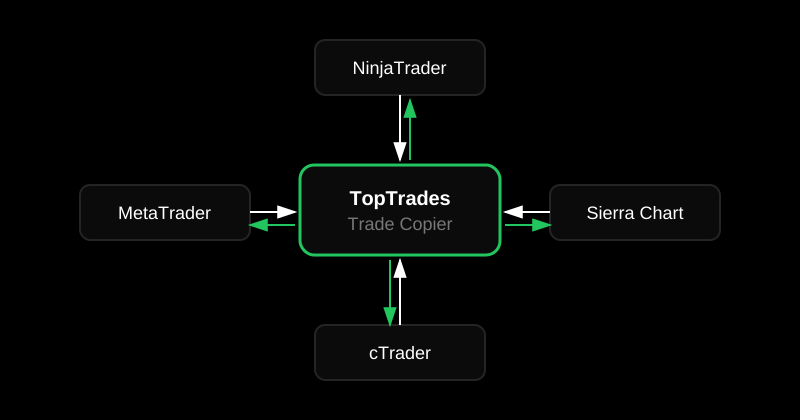
If you're ready to explore copy trading then the TopTrades Trade Copying Platform is a great place to start. Browse live trades from expert traders, check their performance stats, and start copying trades across many of the popular trading platforms such as NinjaTrader, cTrader, MetaTrader, Sierra Chart, TradeStation, IB (Interactive Brokers), etc..
Experienced and profitable traders looking to monetize their performance can learn how to become a signal provider on TopTrades and discover how traders earn money from followers.